5 mistakes Indian staffing firms make tracking 1000+ candidates in Excel
Excel works for the first 100 candidates. By candidate 500 it starts costing you placements. Here's what to fix before it does.
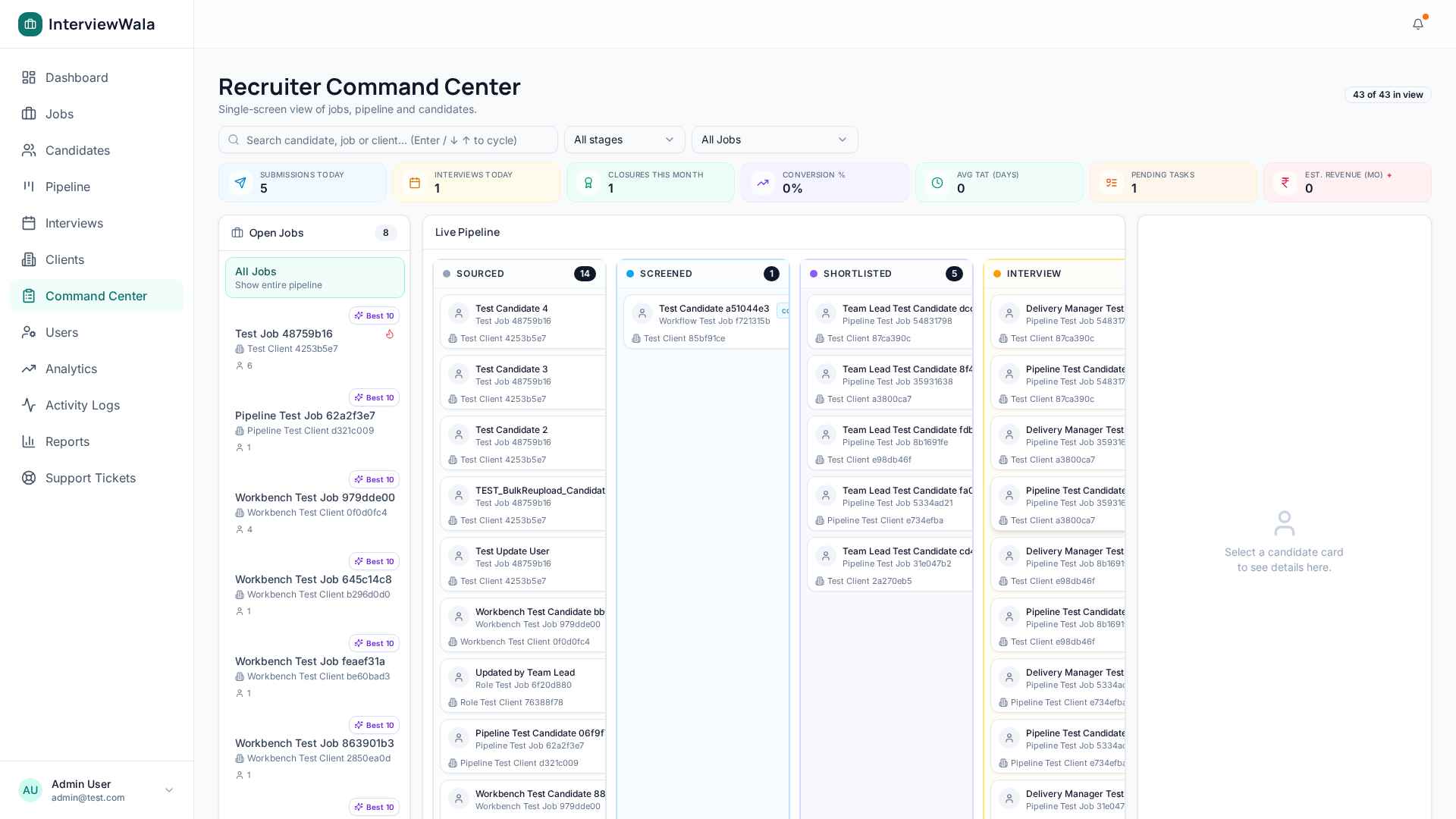
Every Indian staffing firm starts with Excel. It's free, familiar, and works fine for the first hundred candidates. But somewhere between candidate 500 and 1500, the same spreadsheet that built the firm starts costing it placements. We've seen the pattern in three different agencies. Here are the five mistakes that show up every time — and what to do about each one.
1. One file per recruiter, no source of truth
The most common pattern: each recruiter maintains their own Excel for their clients. Hari's file is his "active 2026 list". Priya's file is "Q1 candidates v3 final". When a candidate from Hari's list applies for a job Priya is owning, nobody notices for three weeks — and by then the client has hired someone else.
Fix: one shared candidate database, scoped per organisation. Every new candidate, regardless of who sourced them, becomes searchable to anyone in your firm immediately. Recruiters keep ownership of their own pipelines, but the candidate pool itself is shared.
2. The "stage" column is text, not a workflow
In most Excel sheets, the stage column has values like "screened", "Screening", "Screening Done", "scrned", "screening (waiting client)" — all referring to the same state. Reporting becomes impossible because you cannot trust the data. "How many submissions did we send last week?" is a 30-minute manual exercise instead of a single dashboard read.
Fix: a fixed stage taxonomy with strict transitions (Sourced → Screened → Shortlisted → Interview → Selected → Offered → Joined, with Rejected and On-hold as terminal states). Every change is logged with timestamp and the user who made it.
3. Resumes live in WhatsApp, Drive, Outlook — never the same place
When a client asks "send me their resume again", the recruiter spends 20 minutes searching three places. Worse: when a recruiter quits, half their candidate resumes leave with them on their personal devices.
Fix: every resume attached directly to the candidate record at upload time, stored centrally (not on personal devices), accessible via one URL. Bonus: an AI parser fills the candidate's skills and experience automatically so the recruiter doesn't retype data the resume already contains.
4. Zero memory of why a candidate was rejected before
You source a candidate today, share them with the client, and the client says "we already rejected them six months ago — they failed the technical round". Your firm now looks unprofessional, and the client's trust takes a hit. The information existed somewhere — just not in any place a recruiter would naturally check before submitting.
Fix: every candidate has a single timeline showing every stage they've ever been in, every job they've been considered for, and every remark left by any recruiter or client SPOC. Searchable. Permanent.
5. No clue about TAT, conversion, or recruiter performance
How many days does the average candidate take to go from sourced to joined? Which recruiter has the highest interview-to-offer conversion? Which client takes 14 days to give feedback and which one takes 2? In Excel, none of this is calculable without a separate analysis project. Most firms just don't know.
Fix: live metrics that update as the pipeline moves. Not a monthly export — a top-strip on every recruiter's home screen showing today's submissions, this month's closures, average TAT, and conversion percentage. The number tells the recruiter what to focus on next.
When does it become urgent?
Most staffing firms hit the wall around the 1000-candidate or third-recruiter mark — whichever comes first. By then, the cost of switching feels enormous because the data lives in fifteen Excel files. The trick is to plan the migration before you actually need it.
A good ATS will let you import your existing Excel files in one shot — preserving names, contact info, skills, and even rejection reasons — so the team continues working without losing anything. The transition takes a weekend. The compounding benefit lasts years.